Press Release
Organisation:
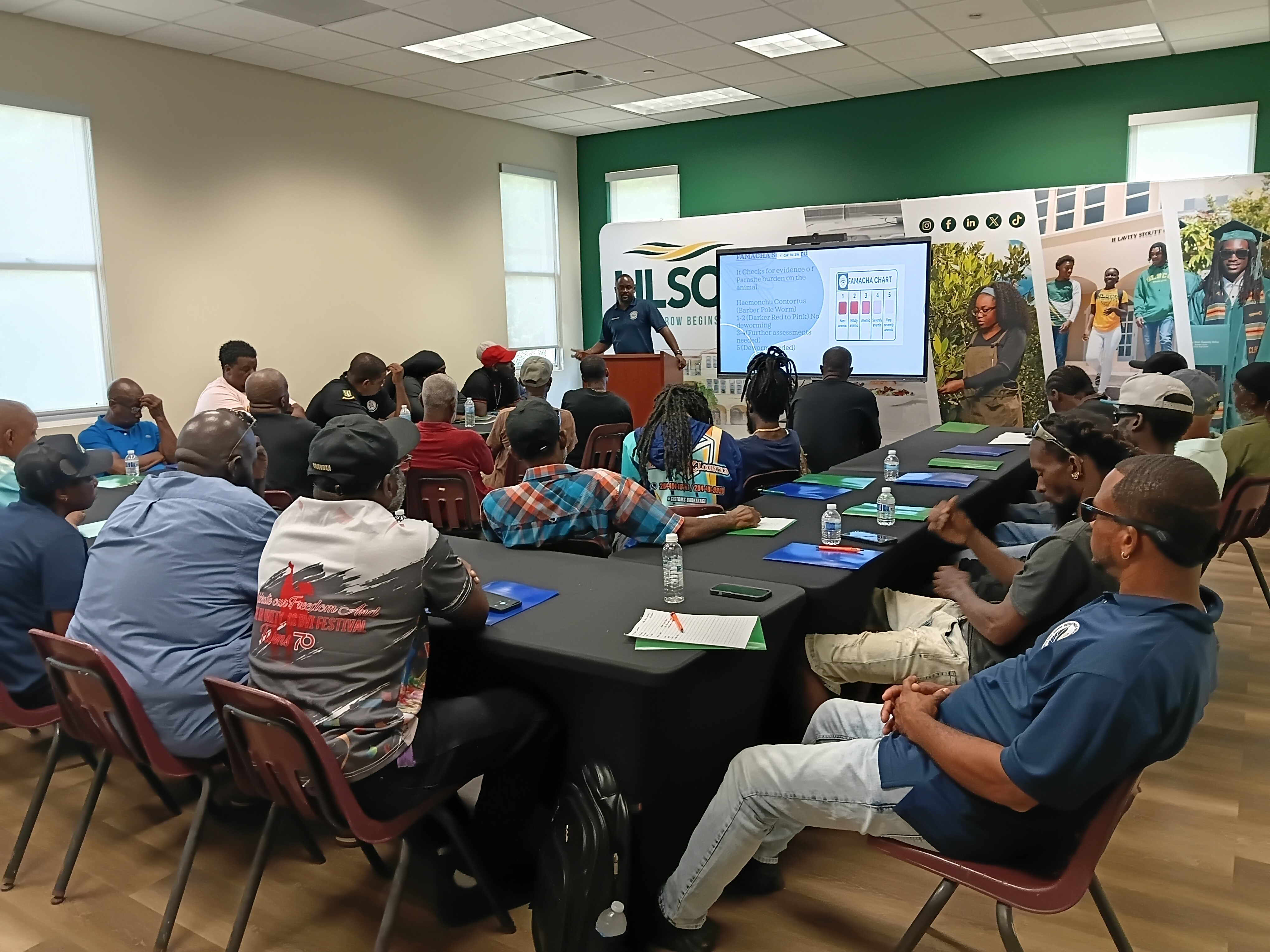
Thirty-four farmers are better equipped to protect their animals' health and their farms' profitability after completing a livestock deworming workshop hosted by the Department of Agriculture and Fisheries.
The workshop was recently held at the Learning Resource Centre, H. Lavity Stoutt Community College (HLSCC).
Director of Agriculture and Fisheries, Mr. Theodore E James, described the turnout as a milestone for the Territory’s livestock sector.
“This is something to celebrate,” Mr. James said. He added, “Thirty-four farmers took a day away from their farms to invest in their own knowledge and in the health of their animals. That tells us our farmers are serious about raising the standard of livestock care in the Virgin Islands, and the Department is proud to stand with them.”
The director urged participants to see their farms as businesses and their animals as their most valuable assets.
“You are not only farm owners. You are the Chief Executive Officers of your businesses,” he said. “Your livestock are the assets that bring in the money, and a business that neglects its main asset won’t last long. Worms don’t announce themselves. They show up as weight loss, poor growth, low productivity and sometimes the loss of an animal. Each of those is money leaving your pocket.”
Mr. James also stressed the value of good record keeping, “A CEO doesn’t run a business without books, and a farmer shouldn’t run a herd without records,” he advised farmers .
Presentations covered common gastrointestinal parasites of livestock, with particular attention to the barber pole worm in sheep and goats. Farmers learned to recognise signs that an animal may need treatment and were introduced to faecal egg counts and the FAMACHA chart as tools for targeted deworming, so treatment is given only to animals that need it.
Preventing infection and reinfection was another key focus. Discussions showed how good pasture management and responsible dewormer use work together to control parasites and slow the development of drug resistance.
Practical sessions helped to put the lessons into action. Through demonstrations of animal assessment and correct deworming technique, farmers learned to estimate an animal’s weight with a weight tape, calculate the correct dose of commonly used dewormers and administer treatment accurately. The hands-on format gave participants the chance to ask questions, share experiences from their own farms and practise skills they can apply.
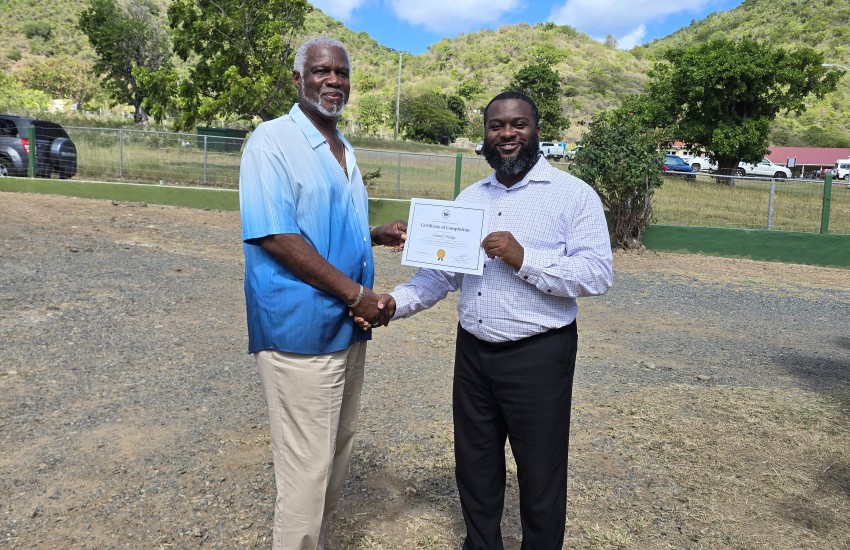
The workshop concluded with the presentation of certificates to all participating farmers.
The department will build on this success by offering further training in the future for crop, livestock, fish and bee farmers and producers.
“This workshop is only the beginning,” Mr. James said. “We will keep bringing practical, hands-on training to farmers and producers across every sector we serve. When our farmers grow stronger, the Territory’s food security grows stronger.”
The Department of Agriculture and Fisheries congratulates the 34 participants and thanks them for their active contribution to the workshop’s success. The department remains committed to supporting continued farmer education and the growth of agriculture and fisheries in the Virgin Islands.
For Additional Information Contact:
Department of Information and Public Relations
Telephone: 468-2730
Email: gis@gov.vg
For Additional Information Contact:
Gallery