Statement
Release Date: 22 April, 2026
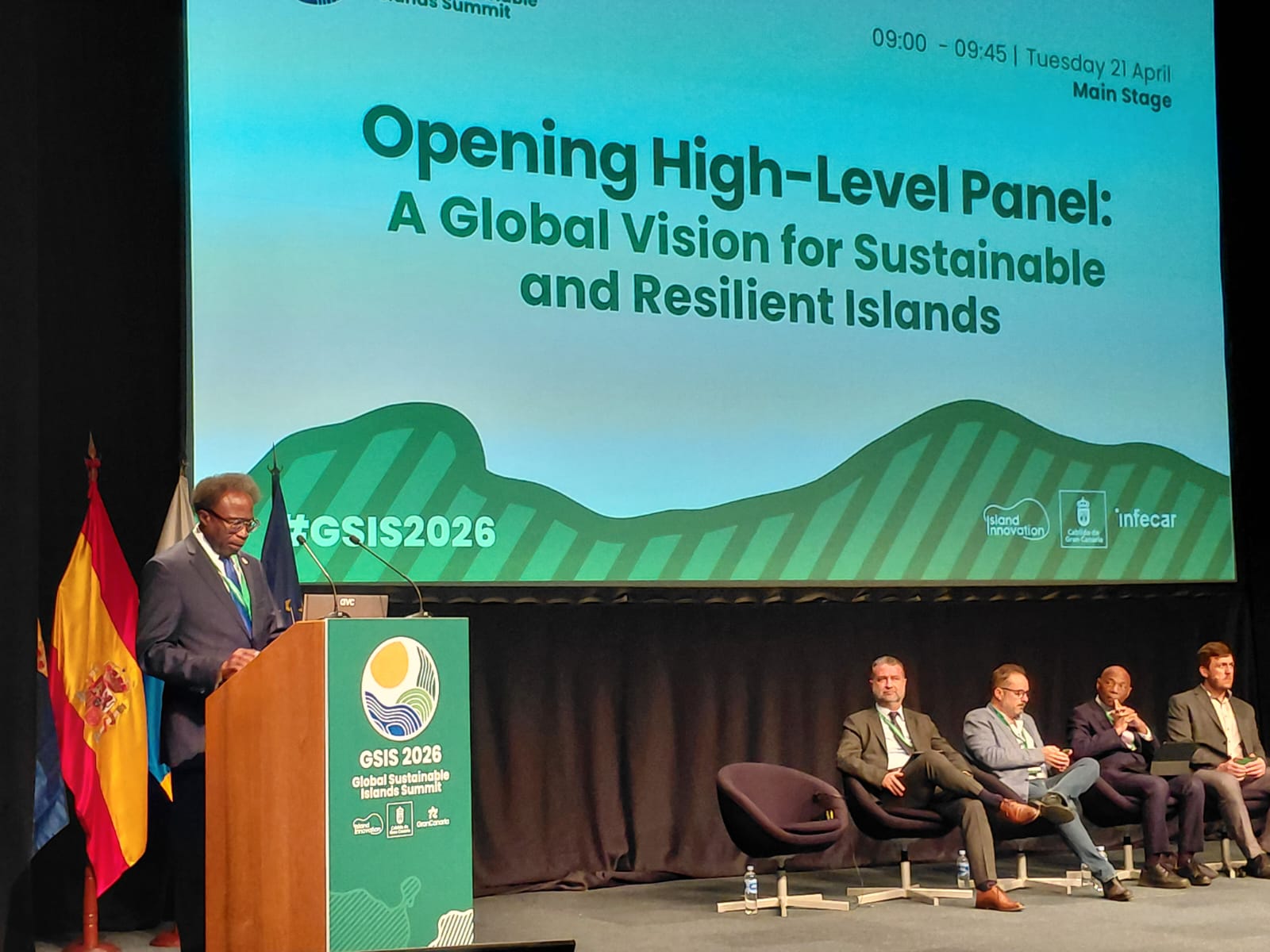
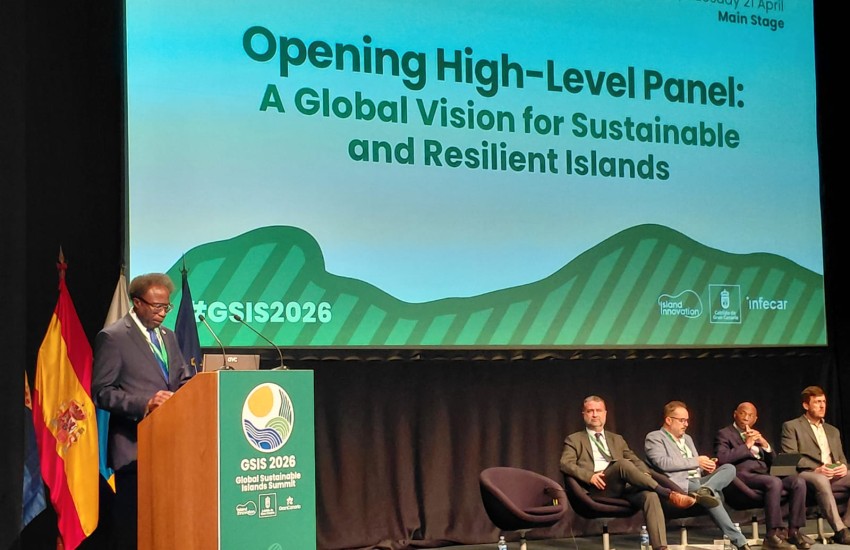
Statement by Honourable Julian Fraser, RA
Deputy Premier and Minister of Environment
Natural Resources and Climate Change
Ministerial Intervention Building Financial and Infrastructural Resilience in Small Island Economies
at the
Opening Panel of the Global Vision for Sustainable and Resilient Islands
Gran Canaria
21st April, 2026
The Virgin Islands is a chain of over 60 islands, rocks and cays in the northeastern Caribbean that has set its sights on becoming the world's first climate-smart island chain.
That is not just a slogan. It is a governing framework, adopted through our climate change agenda. It is a whole-of-territory vision built around five interlocking commitments that we believe every island economy should make to build resilience. These pillars are an island chain:
- Where ecosystems are protected and restored;
- Where our economy is resilient and diverse;
- Where infrastructure is built to withstand the future climate;
- Where clean, renewable energy powers our islands; and
- Where an empowered and engaged community shapes our future.
Allow me to walk briefly through each one, where work is actively taking place.
Firstly, in respect of ecosystem protection and restoration, we are advancing a comprehensive Environment and Climate Change Bill; our most significant piece of environmental legislation in a generation. Alongside that, we are working to actively protect and restore key ecosystems – coral reefs and beaches in particular.
Secondly, in the economic space, The Virgin Islands is working to ensure resiliency in our traditional twin economic pillars - tourism and financial services. Among the innovative and exciting initiatives on the horizon are Disaster and Climate Risk Reduction Clinics which will provide tourism property and business owners with free access to expert professional advice on climate resilience strategies.
In Financial Services we are committed to ensuring that our islands do not become an uninsurable jurisdiction as climate change risks mount, but that insurance remains accessible and affordable for all.
Our Strategic Blue Economy Roadmap, supported by an Implementation Framework, charts a course to develop five Blue Growth Pillars, including new and emerging opportunities such as ocean-based renewable energy, deep seabed minerals and marine biotechnology.
Thirdly, in terms of infrastructure, we are benchmarking our standards for resilience against our 2017 experiences with two record-breaking category 5 hurricanes and a 100-year flood event. Hurricanes Irma and Maria resulted in catastrophic damage to a third of our building stock. Critical infrastructure and facilities were un-spared. That experience, has become the forcing function for our commitment to climate-resilient infrastructure. Our radical but imperative goal – roads, drainage systems, energy and water systems, sewage systems, hospitals and clinics, community centers and schools that remain intact and functional after these types of events.
Fourthly, in the arena of clean, renewable energy, we have set a target of sixty percent renewable energy by 2030. That is ambitious, but achievable and necessary. The island of Anegada, the most northerly and most isolated of The Virgin Islands, is already almost entirely solar-powered. This is proof of concept for what is possible across the chain.
Lastly, none of this works without empowered people. Climate resilience is not delivered from government offices. It is built in communities. That is why, for example, we are planning partnerships with banks to roll out revolving low-interest loan facilities to pave the way for home and business owners, farmers and fishers to afford implementation of a wide array of projects to make their properties and operations climate resilient and carbon-neutral.
The Virgin Islands has set a bold vision for becoming the world's first climate-smart island chain, but without breaking the barriers to accessing international climate finance inherent to Overseas Territories we can only have but so much wind in our sails.
So, in conclusion, I am pleased to share that later today, right here at the GSIS, our delegation will launch The Virgin Islands Climate Change Trust Fund – our innovative solution to mobilising international climate finance at scale to drive and sustain our climate-smart vision.
The Trust Fund is a model that we believe can serve for islands across the world. So, let me be the first to personally invite you all to the Trust Fund Launch to celebrate and learn with us. Details will be shared on the main stage.
I leave you with a thought for reflection throughout this Summit and beyond. Our approach demonstrates that small island economies do not need to choose between development and resilience. When resilience becomes the framework and every infrastructural investment, economic policy, and legislative instrument is shaped by the question of whether it makes us more capable of withstanding and recovering from climate shocks, development and resilience become the same project.
The world's first climate-smart island chain will be built by the sustained and coordinated effort of a community that has decided that its islands are worth protecting, and that the future is worth building.
The Virgin Islands has made that decision. We welcome partners who share it.
Thank you.
For Additional Information Contact:
Gallery